
Professional Tips on Using a 432 Hz Converter for Audio Tuning
For clean audio retuning, choose software that adjusts pitch precisely while keeping the original file as consistent as possible.
A 432 Hz converter is a tool or software application that changes music from the common 440 Hz reference tuning to 432 Hz. The adjustment is small, but it can noticeably change the character of a recording. Many listeners describe the result as softer or warmer, while others hear only a subtle pitch difference. For that reason, the practical value of the conversion depends strongly on the source material, the playback system, and the listener’s own preference.
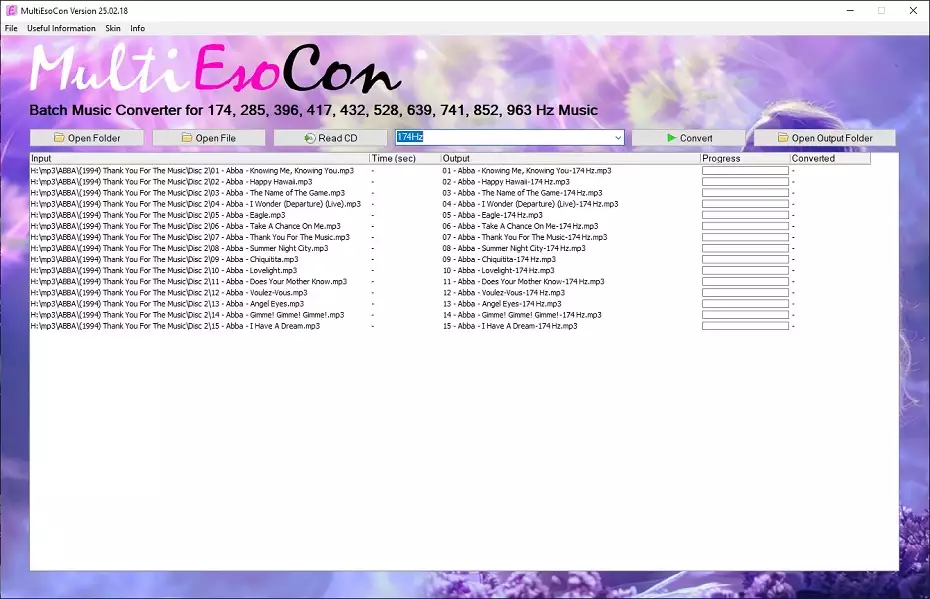
432 Hz Converter
Conversion tools are available as online services, desktop software, and mobile apps. The main difference is not only convenience, but also how carefully the pitch shift is processed. Basic tools may simply lower the pitch, while better software aims to avoid audible artifacts, timing problems, or unnecessary loss of clarity. Before converting a larger collection, it is useful to test one short track and compare the result with the original.
Using a compatible audio tool is usually straightforward. The user selects one or more files, chooses the target tuning, and starts the conversion. Different genres can react differently to pitch changes: acoustic instruments, vocals, bass-heavy productions, and electronic tracks may each sound slightly different after processing. A short comparison listen helps decide whether the converted version suits the intended use.
432 Hz audio is often used in playlists for meditation, yoga, background music, and quiet listening sessions. In these cases, the purpose is usually atmosphere rather than technical correction. The converted file should still sound balanced, free from distortion, and suitable for the speakers or headphones used during playback.
Claims about special effects of 432 Hz music should be treated cautiously. The audible result is a tuning change, not proof of a universal effect. Anyone using converted music for personal routines can compare versions over time and decide which sound they prefer, without relying on broad claims that cannot be verified from the audio file alone.
Investigating Special Applications of the 432 Hz Converter in Acoustic Listening Processes
A specialized converter can help prepare music collections for consistent playback in relaxation, studio, or background-audio settings.
One common application is the preparation of themed audio sessions where all tracks should share the same target tuning. This can be useful when a playlist combines songs from different albums, years, or production styles. Converting the files in advance avoids switching between different tuning references during playback and keeps the listening experience more uniform.
Another practical use is evening or low-volume listening. Some users prefer 432 Hz versions for softer playlists, especially when they want a less bright impression than the original recording. This is a subjective listening choice, not a guaranteed result. The final impression still depends on the track, the conversion quality, the room, and the playback device.
In yoga and meditation environments, the 432 Hz converter audio frequency guide can be used to standardize background music before a session. Studios that use recurring playlists may benefit from preparing the files once instead of adjusting tracks manually each time. This keeps the workflow simple and reduces the chance of inconsistent settings between individual songs.
Sports and movement environments may also use retuned music when instructors want a specific sound character for warm-up, stretching, or cooldown playlists. The converter’s role is limited to changing pitch and preparing consistent files. Tempo, arrangement, volume, and track selection remain separate decisions that should be handled during playlist planning.
Outside personal use, 432 Hz versions can serve as ambient music in spas, wellness areas, waiting rooms, studios, or other quiet spaces. In such settings, technical consistency matters: files should have comparable loudness, clean transitions, and no obvious artifacts from conversion. A reliable workflow is often more important than repeated claims about the frequency itself.
Key Requirements for Choosing a 432 Hz Converter for Prepared Music
When selecting conversion software, focus on stable pitch processing, supported formats, batch mode, and a workflow that fits the size of your music library.
The first requirement of a reliable music conversion solution is clean audio processing. The software should change the tuning without adding obvious glitches, harshness, or volume jumps. This is especially important for instrumental music, vocals, and longer tracks where small artifacts become easier to notice during repeated playback.
Format support is another major factor. Users may work with lossless files such as FLAC and WAV, compressed files such as MP3 and AAC, or mixed libraries collected over many years. A useful converter should handle common formats without forcing unnecessary extra steps. Clear export settings also help users keep track of bitrate, sample rate, and destination folders.
Usability matters when large sets of recordings need to be processed. Audio designers and playlist editors benefit from batch handling because it saves time and reduces repetitive manual work. By utilizing this 432 Hz converter, complete folders can be moved into the chosen tuning with fewer individual steps. A clear interface, readable file lists, and predictable presets make the process easier for users who do not want to manage complex audio settings.
Batch processing is especially useful when playlists are prepared in advance. Instead of converting files one by one, users can process albums, folders, or selected track groups together. Using defined input and destination folders, that 432Hz converter for 440Hz separates source material from completed audio versions. This keeps the target tuning consistent and makes it easier to organize finished files for later playback.
Integration with media players, audio folders, and mobile workflows can make the converter more practical. Users may want to export finished files directly into a library, copy them to another device, or use them with separate playback software. Good integration reduces file-handling errors and makes the conversion process easier to repeat.
Finally, ongoing support and updates are relevant for any audio application. Operating systems, file formats, and playback environments change over time. Regular maintenance helps keep the software usable, avoids compatibility problems, and can improve the reliability of the conversion process.
Understanding the 432 Hz Converter - Preparing Music for Alternative Tuning
A quality converter helps users create 432 Hz versions of existing music while preserving as much of the original sound character as possible.
The history of musical tuning shows that pitch standards have varied over time. Today, 440 Hz is widely used as a reference pitch, while 432 Hz is preferred by some listeners for its different sound character. A converter gives users a simple way to compare both versions without needing to manually retune or edit the recording in professional audio software.
The discussion around 432 Hz often includes subjective descriptions such as warmer, softer, or more natural. These descriptions reflect listening impressions rather than measurable guarantees. A careful comparison should use the same track, same volume, and same playback setup, because differences in loudness or speaker quality can easily influence the result.
Using a 432 Hz converter batch conversion software is usually a simple file-based process. The user uploads or selects music, chooses the target frequency, and exports the adjusted version. A good workflow keeps originals separate from converted files, names exports clearly, and avoids overwriting source material by mistake.
Not every listener will prefer the converted result. Some tracks may lose energy after pitch adjustment, while others may sound smoother depending on the arrangement. For this reason, it is sensible to test several genres before converting an entire music library.
For meditation, yoga, quiet work, or background playlists, the main goal is a consistent sound environment. A converter can help prepare files for that purpose, but track choice, volume matching, and playback quality remain just as important as the selected tuning reference.
432Hz Converter: Bit Depth Considerations and Free Download Availability
Bit depth, export format, and file handling influence the final audio result when pitch is adjusted. Free tools can be useful for testing before choosing a long-term workflow.
Bit depth affects the resolution of digital audio and the available dynamic range. A 16-bit file can represent 65,536 amplitude levels, while a 24-bit file can represent over 16 million levels. When music is converted to another tuning, preserving suitable export settings helps avoid unnecessary quality loss, especially when the file will be edited or processed again later.
Many audio conversion programs are available, including free downloads. These tools differ in stability, interface design, supported formats, and export options. For a side-by-side listening test, create a second version with the 432 Hz converter and compare it with the original. A free version can be a practical way to test basic pitch conversion before committing to a specific application. Users should still check whether the software fits their operating system, file types, and preferred folder structure.
Some advanced converters include features beyond simple frequency adjustment. These may include audio effects, equalization, loudness handling, or batch processing for multiple files. Such options can improve the workflow of a 432Hz converter when users need consistent exports for playlists, studio archives, or recurring audio projects.
The user experience depends heavily on software design. Some programs guide the user through a few clear steps, while others expose many technical settings at once. Documentation, tutorials, and community discussions can help users understand export choices, avoid accidental overwriting, and organize converted files properly.
Converting music to 432Hz changes the pitch reference and can alter how a track is perceived. Some listeners prefer the adjusted version for quiet playlists, while others prefer the original tuning. Because the preference is subjective, side-by-side comparison is the most practical way to decide whether the conversion is useful for a specific music collection.
Practical Notes on 432 Hz Music Conversion
Convert selected tracks to 432 Hz when you want to compare an alternative tuning with the standard 440 Hz version.
What is 432 Hz Frequency?
432 Hz refers to a tuning reference that places the note A slightly lower than the common 440 Hz reference. The change affects the pitch of the entire track and may give the recording a different tonal impression.
Benefits of 432 Hz Music for Listening and Playback
- It allows direct comparison between a 440 Hz original and a 432 Hz version of the same track.
- It can be useful for creating playlists with one consistent tuning reference.
- Some listeners describe music tuned to 432 Hz as softer or warmer than the standard version.
- It gives musicians, producers, and audio users another option for testing sound character.
- It can support themed background playlists where a uniform tonal impression is preferred.
- It helps organize converted files for recurring listening sessions or audio projects.
- It can be tested with different genres to hear how vocals, bass, and acoustic instruments respond.
- It offers a simple way to experiment with pitch reference without editing every track manually.
- It is suitable for batch workflows when many files need the same target setting.
- It keeps the original creative decision in the user’s hands: compare both versions and keep the one that sounds better.
How to Convert Your Music to 432 Hz
To create a 432 Hz version of your music, use software or an online tool designed for audio conversion. Select the source files, choose the target tuning, review the export settings, and save the converted tracks separately from the originals.